First practical application of concrete with Bio-plasticizers
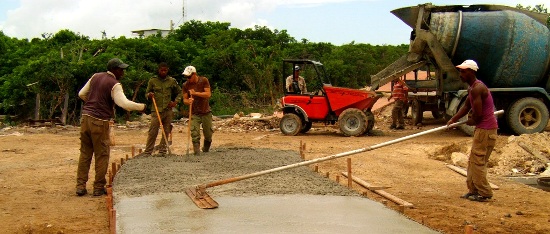
In July, 2013, the Center for Research and Development of Structures and Materials, CIDEM*, made the first practical application of a biological plasticizing additive based on Efficient Microorganisms. The concrete, designed to reach 25 MPa, was placed on the pavement of a hotel in the province of Villa Clara, near the city of Santa Clara.
The additive called "MEF" (effective microorganisms Finlay), was developed through a collaboration between CIDEM, the agricultural Experimental Station "Indio Hatuey" (IHH) and the Institute "Carlos J. Finlay". For this first practical application they produced 4 m3 of concrete.
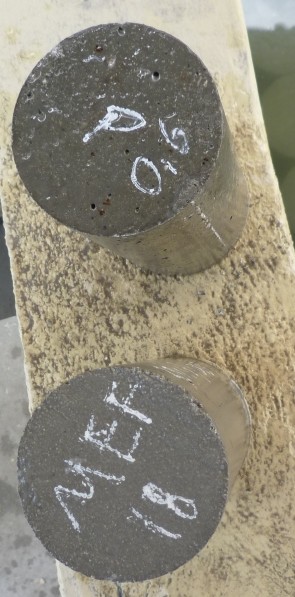 The production of pre-mix concrete requires the use of plasticizers which allows the material to reach the desired consistency with the least amount of water. International production and sale of super plasticizers is a monopoly in the hands of a small number of companies, mostly European. One cubic meter of concrete of 30 MP consumes 3-12 liters of these products, which price is between 1 and 5 U.S. dollars. The use of plasticizers in Cuba may represent up to 15% of the cost of a cubic meter of concrete.
Since 2008 and in cooperation with IIHH , CIDEM worked on the product "plasticizer additive in concrete" based on "effective microorganisms". In mid- 2012 the Institute C. J. Finlay invited CIDEM to collaborate in the development of an industrial product with plasticizing properties that could be sold to the Cuban industry. A multi -disciplinary team of microbiologists at Finaly and the Institute of Plant Biotechnology at the University of Las Villas, plus chemical and civil engineers from the same university formed a task force. This team has studied and modified the product to bring it to a point where it could be used as a substitute for commercial plasticizers. The occasion to proove it in real life terms was a collaboration with an International construction company which builds on the northern coast. They showed interest since the beginning and provided the immediate possibility to proof the results in their works. This was an invaluable aid in closing the research - application cycle .
The plasticizer is still in its development phase. The main problem at present is the high dilution that occurs, which requires a high-dose of the product to achieve the desired effect. The team works to solve this problem, and is expected to soon be able to announce good news.
For now, and in the words of José Artiles, the technician in charge of the dosification unit at the pre-mix factory ECOT : "the additive produces some interesting improvements in the workability of concrete mixes, which eases the hard work of placing the mix... the resulting concrete is much more consistent and has no problems of bleeding or segregation of the aggregate. "
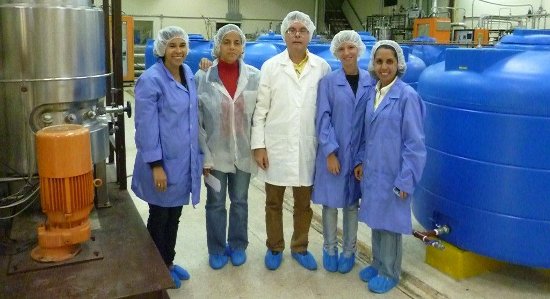
Dr. Fernando Martirena with some of the MEF development team
This product will be presented to the Cuban authorities for certification for marketing and use in mid-2014. For this date the factory installed at the Finlay Institute will be at full capacity and give Cuban builders a product that will allow the country to replace imports of additives and improve the properties of concrete. The Finlay Institute uses a circuit of instalaltions from a vaccine production plant that had reached technological obsolescence, to mount an efficient industrial production of microorganisms in order to supply the Cuban agricultural and domestic market. This plant has a capacity for industrial production of about 12 million liters per year.
CIDEM is a founding member of the EcoSur network and several other members have played important roles in the background, as well as contacts with investigators of Efficient Microbes in several countries around the world.
*CIDEM is the local partner of the EcoSur network in Cuba
By Dr. Fernando Martirena
Edited: EcoSur


